+57%
Order Value, App vs Website
+187%
Lifetime Value Per App User
0.9s
Cold Launch
100%
Source Code Yours
Built Around Your Business. Not Resized From Someone Else’s.
Custom mobile app development means the app follows how your business already works — your catalogue, your delivery partners, your approval rules. Not a template with your logo on it. Templates are fine, until the day you need one screen they don’t have. Then there’s no way through.
D2C and fashion brands
The website converts. Repeat buyers still type the URL every single time. An app gives them a one-tap way back, and for the brand in our case study below, those app buyers spend 57% more per order.
Field sales and service teams
Reps in Bhiwandi godowns and on Andheri sites, taking orders on WhatsApp and a notebook. They need an app that works offline and syncs when the signal comes back — which, three levels down in a basement car park, is never quite when you expect.
Clinics, diagnostics, wellness
Bookings, reports, reminders. The patient wants the report PDF on their phone, not a call to the front desk at 8:40pm asking where it is.
Logistics and delivery
Driver apps with proof of delivery, route order and COD reconciliation. Built for a 3GB-RAM Android phone, because that is what the driver actually carries. Not the flagship on our desk.
Startups building an MVP
One type of user, one core flow, one way to pay. Enough to test the idea with real people — the rest waits. Founders without a technical lead often start with a fractional CTO first, and then build.
Businesses already running a system
An ERP, a CRM, a custom dashboard. The app becomes the front end for the people who never sit at a desk. Well, most of them. The desk side of this is on our business management software page.
Mobile App Development Services
Six kinds of work. One team — the same engineers from the first scoping call to the fix you need three months after launch.
Android App Development
Kotlin, when the app needs deep hardware access — Bluetooth printers, barcode scanners, background location. Most of India is on Android, so this is where a Mumbai business usually starts.
iOS App Development
Swift and SwiftUI. Worth building natively when your buyers skew premium or the app leans on Apple Pay, HealthKit or widgets. Otherwise, honestly — go cross-platform.
Flutter App Development
One codebase, identical on both platforms down to the pixel. Our default when the design has to look exactly the same everywhere and there is no web codebase to share.
React Native App Development
One codebase that shares logic with a React website. The D2C app on this page is React Native: 120ms hot launch, 900ms cold. Which answers the usual objection to cross-platform.
Enterprise Mobile App Development
Internal apps for staff. Approvals, inspections, attendance, stock counts. Single sign-on, role-based access, device management. Unglamorous work — the kind of app that gets opened every shift.
Ecommerce and On-Demand Apps
Catalogue, cart, UPI and card checkout through Razorpay, order tracking, push notifications. On-demand adds a second app for the partner — the driver, the technician, the tutor — and that second app is where most of the complexity hides.
Every app ships with the backend and admin panel it needs. We don’t hand you a front end and a list of APIs somebody else has to build. If the app needs to think — search, support, voice — that part comes from our AI agent development work.
Native vs Flutter vs React Native
Short answer: for most Mumbai businesses, cross-platform. Flutter if the design has to be identical everywhere. React Native if you already run a React website. Native when the app lives on hardware — and, well, mostly only then.
Native
Separate apps. Kotlin for Android, Swift for iOS.
- Good for
- Bluetooth printers, scanners, background location, heavy camera work
- Watch out for
- Two codebases, two sets of bugs, every feature built twice
- Team you need
- Android and iOS engineers, separately
- Our take
- Right when the hardware is the product. Rarely otherwise
Flutter
One Dart codebase, drawn by its own rendering engine.
- Good for
- Design-heavy apps that must look the same on a budget Redmi and an iPhone
- Watch out for
- Bigger app size. Some native SDKs need a bridge written by hand
- Team you need
- One team
- Our take
- Our default for a new app with no web codebase to share
React Native
TypeScript, rendering real native components.
- Good for
- Businesses already on React — logic and engineers shared with the website
- Watch out for
- Performance takes discipline. A careless build feels sluggish
- Team you need
- One team, often the same one that runs your web app
- Our take
- Our pick when a React site already exists. The D2C app below is one
If an agency gives you the same answer for every project, you’re hearing what their team happens to know. Not what your app needs.
A D2C Clothing Brand’s App
+57%
Average Order Value, App vs Website
+187%
Lifetime Value Per App User
120ms / 900ms
Hot Launch / Cold Launch
- What we built
- Android + iOS app, and a custom admin panel
- Stack
- React Native, FastAPI, PostgreSQL, Redis, Razorpay
- Before
- A website we had already built for them
The app their best customers moved to
We had already built their website. It sold fine. So the real question was never whether we could build an app — it was whether an app would earn its place, or just become one more thing somebody has to keep updated.
One React Native codebase, Android and iOS. Categories run along the top — coats, kaftans, kaftan sets, kurtis — so someone who has bought before is two taps from whatever just dropped. Product pages carry the size guide and a share button. Checkout goes straight to Razorpay. No detours.
Behind it sit FastAPI and PostgreSQL, with Redis caching the catalogue. Hot launch takes 120ms. Cold launch, 900ms — under a second from tapping the icon, even on patchy mobile data.
We built the admin panel from scratch too, instead of bolting on an off-the-shelf dashboard. It works on a phone. The team changes prices, photos and categories without waiting to get back to a laptop.
App customers now spend 57% more per order than website customers, and are worth 187% more over their lifetime. Our read: the app didn’t create new buyers. It gave the loyal ones a faster way back, and they spend more every time they use it.
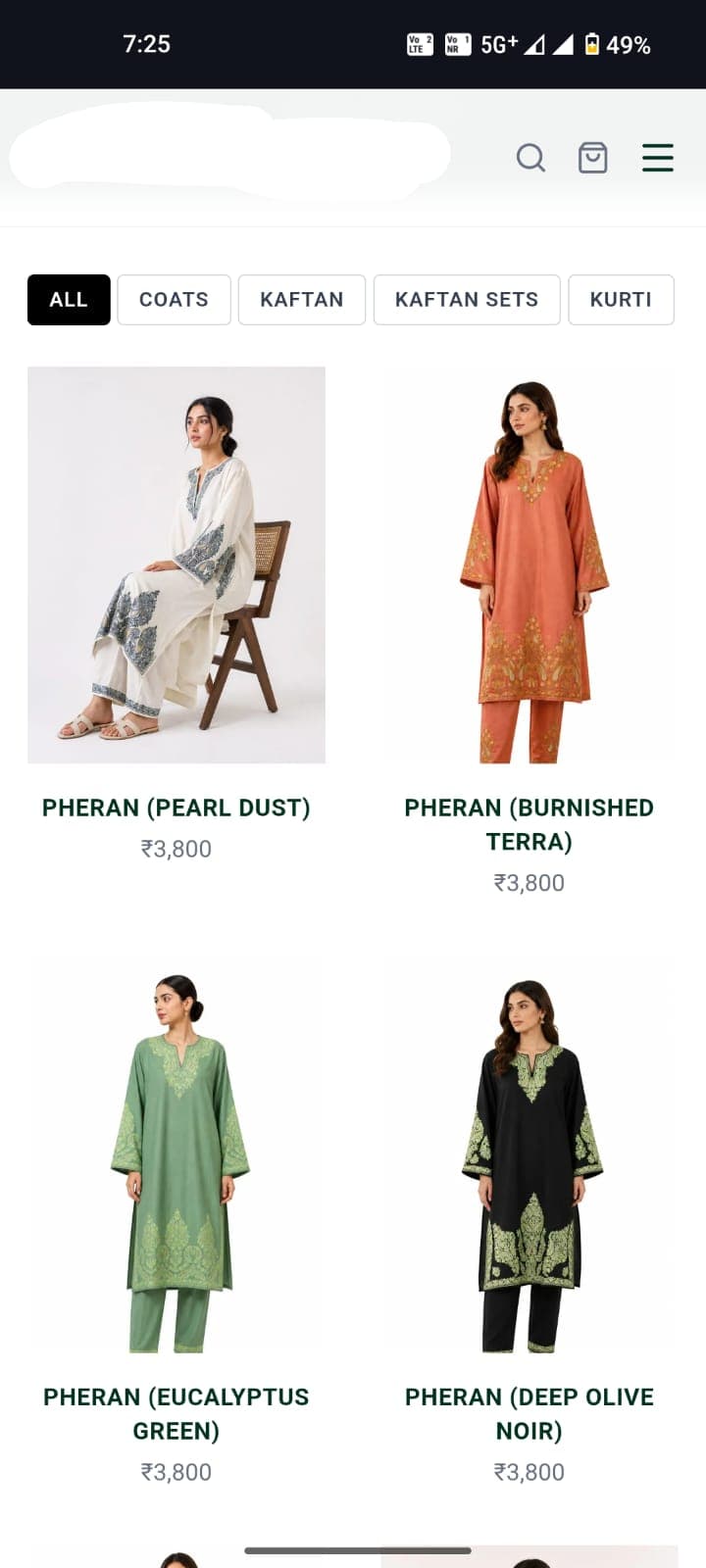
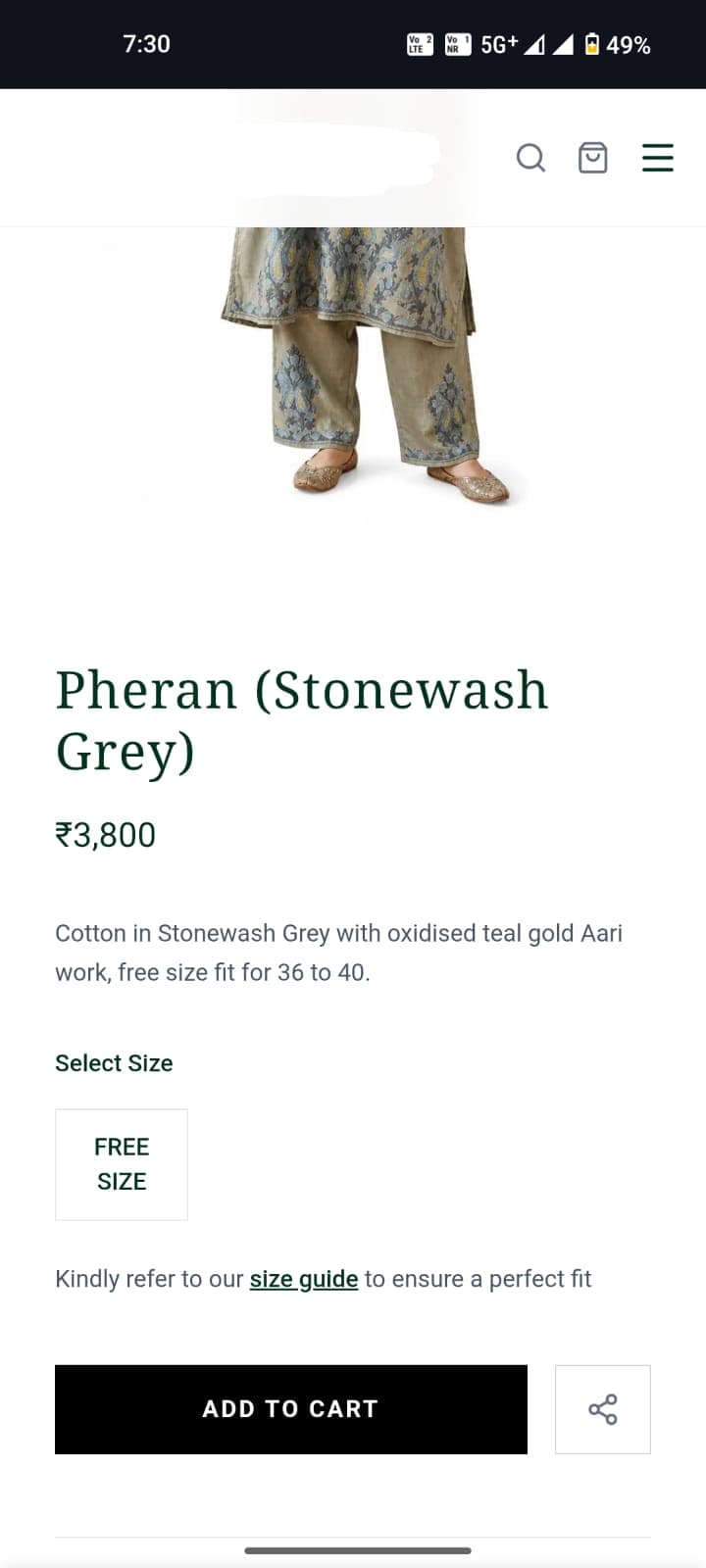
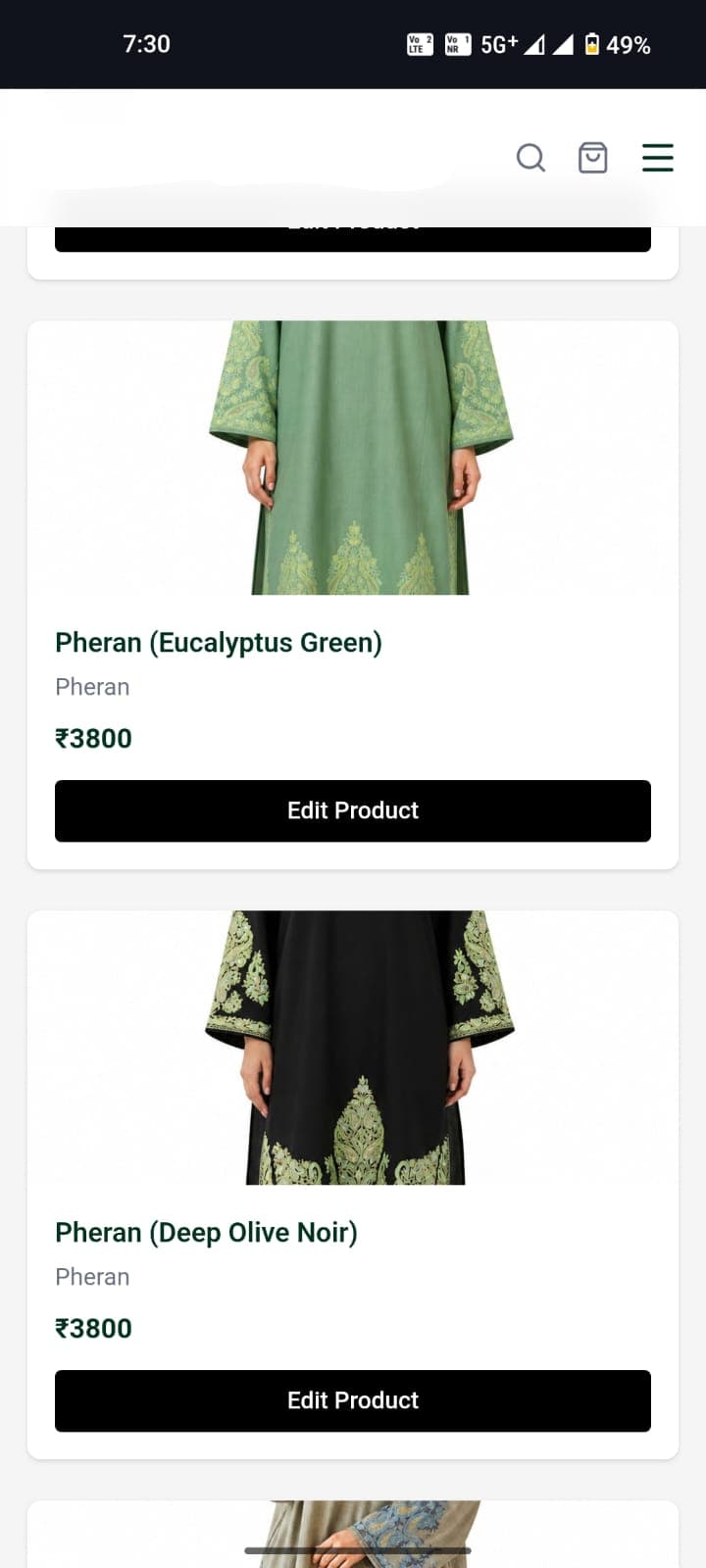
Client name withheld under NDA — we’re happy to walk you through the build on a call. More of what we’ve shipped is on the projects page.
What Clients Say When We’re Not In The Room
“The thing I found most impressive was that Nexona did not approach the project as a simple ‘build what the client asks for’ engagement.”
“When they believed there was a better technical approach, they explained the relevant context, discussed the trade-offs, and gave their own recommendation.”
Same review, the one thing they’d change: “more formal documentation and planning around certain architectural decisions.” Fair. We left it in.
From Scoping Call To The Play Store
The build is rarely the slow part. Deciding what not to build is. That, and the store review nobody puts in the plan.
Scope, and cut
We need from you. An hour with whoever will actually use the app. Not only whoever is paying for it
You get. A written scope, a screen list, and the three features we would leave for version two
A prototype you can tap
We need from you. Feedback within two days on each round
You get. A clickable prototype on your own phone. You will change your mind about checkout here — far cheaper than changing it in week nine
Build, in two-week sprints
We need from you. One person who can answer questions the same day
You get. A working build installed on your phone at the end of every sprint. Not a status report. The app
Test on real devices
We need from you. Two or three of your staff trying to break it
You get. Tested on the budget Android your customers actually own, not only the flagship we develop on
Stores, and the first rejection
We need from you. Google Play and Apple developer accounts in your company’s name
You get. Listing, screenshots, privacy forms, submission — and the first review rejection handled. There is usually one
Keep it running
We need from you. Nothing, unless you want new features
You get. Crash monitoring from day one, a named engineer on WhatsApp, and fixes before Apple’s September OS release breaks something small
What We Build With
Boring, well-supported tools. Your app should outlive our involvement, and the next engineer who opens the code should recognise everything in it.
Mobile
Backend
Payments & India stack
Cloud & monitoring
What Drives The Cost Of An App
We don’t publish a price. A number quoted before anyone has seen your screens is a guess with a rupee sign on it. Here is what actually moves it, so you can judge the size of your project before you talk to anyone.
One platform or both
Cross-platform builds both from one codebase. Two native apps is close to two projects.
How many types of user
A shopper is one app. Add a delivery partner, a vendor or a technician and you are building a second app, plus the logic that connects them.
What it has to talk to
Razorpay is quick. Your ERP, a courier API, an old system with no API at all — each one adds integration work, and the undocumented ones add the most.
Backend and admin panel
If a backend already exists, the app plugs into it. If not, we build one, along with the admin panel your team runs things from.
Offline and hardware
An app that works without signal needs sync and conflict handling. Printers, scanners and background location need native code.
The deadline
A launch pinned to Diwali or a trade show means more people working in parallel. Possible. Rarely cheaper.
Three ways to work with us: a fixed scope for a defined first version, a dedicated team billed monthly, or a retainer after launch. Not a cost driver — how many people download it. No per-user licence, ever. We scope first, then quote.
7 Questions To Ask Any App Development Company In Mumbai
Seven questions to ask anyone you’re considering. Including us.
Whose name are the store accounts in?
If the app is published under the agency’s developer account, you don’t fully own it. Moving it later is painful, sometimes impossible. This one question disqualifies more agencies than any other.
Can I install something you built?
Not a portfolio PDF. An app, from the store, on your phone, that you tap through during the call.
Who builds it — you, or someone you hand it to?
The people on the sales call and the people writing the code are often different companies. Ask to meet the engineer.
Which phones do you test on?
If the answer is the latest iPhone and a Pixel, your customers on budget Androids will find the bugs for you.
What happens when Apple rejects it?
It will, probably once. You want someone who has handled that before and has already budgeted the time for it.
Who fixes it in month four?
A named person on WhatsApp, or a ticket queue. Ask how fast they reply on a Saturday.
Why that framework?
If every project gets the same answer, you’re hearing what their team knows, not what your app needs.
Mumbai, Thane & Navi Mumbai
Nexona is registered in Mumbai. If you’re looking for a mobile app development company in Thane or Navi Mumbai, we work there too — as a team that comes to you, not an office we pretend to have.
Scoping happens in person if you want it, in front of the people who will use the app. Watching a delivery supervisor use their phone for ten minutes tells you more than an hour in a meeting room. The build itself is remote, like most engineering teams in this city.
Areas We Cover
Also: Software development in Mumbai · Navi Mumbai · AI automation in Thane
What People Ask Before Building An App
Send Us The Idea. Half-Formed Is Fine.
A voice note. A sketch on the back of a bill. A competitor’s app with the parts you hate circled in red. That’s enough for a first call — we’ll tell you what version one should be, and what it shouldn’t.
Let's Talk
Business
Ready to automate and elevate?