Multi-tenancy, AI, PaaS, email and voice. The last two are the ones we can show you running.
How do you build a multi-tenant SaaS platform?
Pick an isolation model first: pool, bridge or silo. Most startups should begin with pool, meaning one database with row-level security, and keep a path to silo for customers who demand it. Then add tenant-aware login, billing per tenant, and automated tests that deliberately try to read another tenant’s data.
Pool, bridge and silo multi-tenant SaaS models compared| Model | How it works | Trade-off | Start here when (our view) |
|---|
| Pool | Tenants share the stack, the database and the tables. Row-level security keeps them apart. | Costs the least, offers the least isolation. | Most new SaaS products. This is where we would start. |
|---|
| Bridge | Tenants share the stack and the database instance, each with a dedicated schema. | A hybrid of pool and silo. Some compliance alignment. | A few customers ask for separation, most don’t care. |
|---|
| Silo | Each tenant gets a dedicated stack and database instance. Nothing crosses tenant boundaries. | Strongest isolation, highest cost and complexity. | Regulated or enterprise customers who will pay for it. |
|---|
Models as defined in AWS Guidance for Multi-Tenant Architectures.
On Postgres, the pool model looks like this. A database policy compares each row’s tenant to a value your application sets at runtime, so one forgotten WHERE clause can’t leak a customer’s data. (AWS Prescriptive Guidance on row-level security)
ALTER TABLE tenant_user ENABLE ROW LEVEL SECURITY;

CREATE POLICY tenant_user_isolation_policy ON tenant_user
USING (tenant_id = current_setting('app.current_tenant')::UUID);
White-label is a layer on top: per-customer domains, branding, sending addresses and plans. Mailnitrix has a lighter version of this, with client workspaces so agencies can run campaigns for each client separately.
How do you add AI or RAG features to an existing SaaS?
Start with one feature and one tenant’s data, not a rewrite. Index that content in a vector store, filter every retrieval by tenant, and call the model through your own service layer so you can swap it later. Log every answer, meter usage per tenant, and let users flag wrong ones.
The filter is the part people get wrong. A vector search with no tenant filter will cheerfully quote customer A’s contract to customer B. If the feature needs to take actions, not just answer, that is closer to our AI agent development work.
What is PaaS, and when should a startup build one?
PaaS, or platform as a service, gives developers a platform to build and run software on, instead of a finished app. Build one only if developers are your customer and you have already run the workload yourself. For most startups the answer is not yet. Ship the SaaS, then expose an API.
PaaS development services, from us, means the platform layer: public APIs, webhooks, tenant provisioning, usage metering and developer docs. Valyrian Voice agents call outside systems through HTTP tools and webhooks, and Mailnitrix lists an API and webhooks. Neither one is a PaaS. Both had to build that layer anyway.
SaaS vs PaaS: which should I build?
Build SaaS if your customer is a business user who wants a job done. Build PaaS if your customer is a developer who wants to build on top of you. SaaS has the shorter road to first revenue. PaaS needs docs, SDKs, quotas and a reliability bar that first-time teams underestimate.
SaaS compared with PaaS for a startup deciding what to build | SaaS | PaaS |
|---|
| Your customer | A business user with a job to get done. | A developer building their own product on you. |
|---|
| What you ship | A finished application. | APIs, SDKs, a console and documentation. |
|---|
| Road to first revenue | Shorter. Someone can pay in week one of launch. | Longer. Developers evaluate slowly and integrate slower. |
|---|
| Hardest part | Finding the workflow people will pay for. | Your outage is now every customer’s outage. |
|---|
| Examples | Valyrian Voice, Mailnitrix. | Heroku, Vercel. |
|---|
In India, Gartner forecasts 2026 spending of about ₹61,000 crore on PaaS, up 25.4%, against about ₹44,000 crore on SaaS, up 18.9%, converted from US dollars (Gartner, June 2026, via IT Voice). That is spending on existing platforms, much of it AI-driven. It isn’t a reason for you to build one.
How do you build an AI chatbot SaaS with RAG pipelines?
Build four parts: document ingestion per customer, tenant-filtered retrieval, a model layer you can swap, and a widget or API customers embed. Then add usage metering, because AI costs scale with every query. Our RAG chatbot project runs retrieval and generation on a single GPU or CPU setup, at roughly 400 to 700 ms response latency.
See the RAG chatbot project. That one is a portfolio build, not a SaaS with paying tenants, so read it as proof of the pipeline. Tenancy and billing are the parts you would add from the multi-tenant answer above.
What goes into email infrastructure SaaS development?
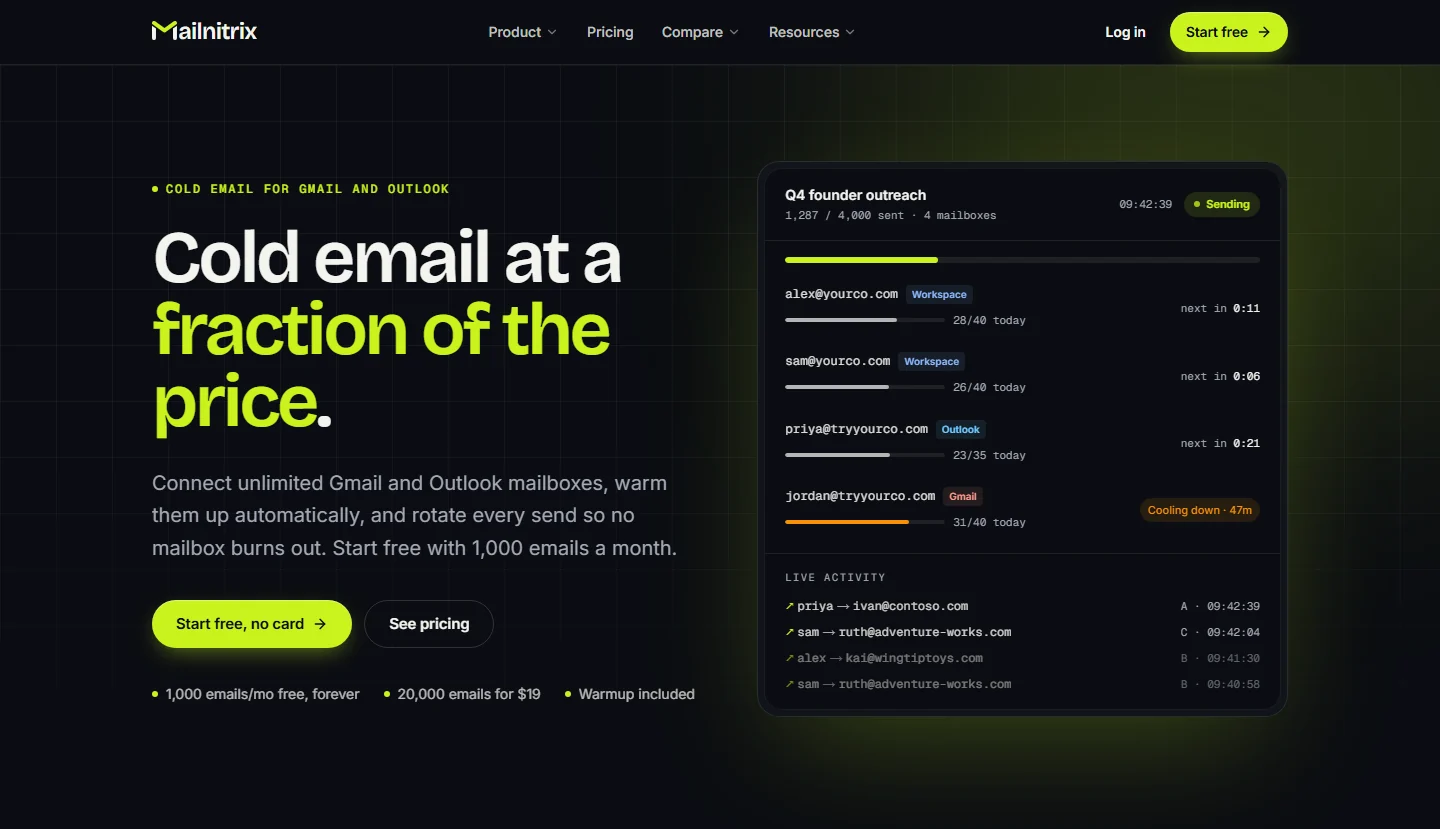
Mailbox connections, warm-up, send pacing, per-mailbox limits, error-code handling, reply detection and unsubscribes, plus analytics that filter out bot opens. We built this for Mailnitrix, a cold email SaaS that sends through customers’ own Gmail and Outlook mailboxes. Running your own IP pools and mail servers is a different, harder project.
The unglamorous bit is the error table. At Mailnitrix, a Gmail 550 5.4.5 rests that mailbox for 24 hours, a 421 4.7.28 pauses it for an hour and longer on repeats, and an Outlook mailbox with SMTP disabled switches to the Microsoft Graph API and retries. Mailbox passwords and Microsoft tokens are encrypted at rest. More on email infrastructure development.
What goes into voice AI SaaS development?
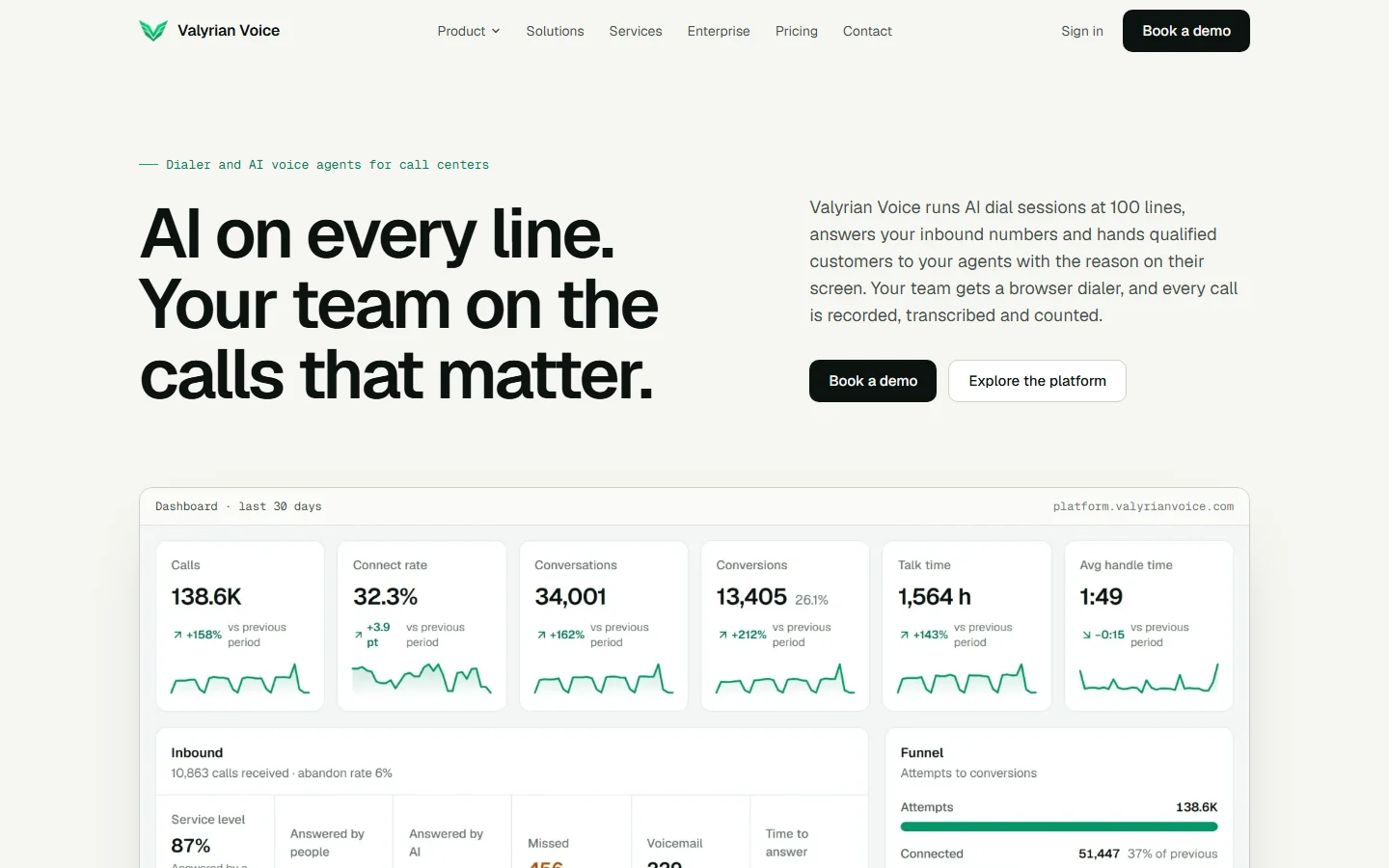
Telephony, speech recognition, a language model and voice synthesis, fast enough to hold a conversation, plus the dialer, transfers, recordings and billing around them. We built Valyrian Voice this way: AI dial sessions at 100 lines, inbound routing and human handoff. Its site reports 3,000 to 4,000 calls an hour on one dedicated GPU.
Latency is the hard part. A pause of a couple of seconds and the caller assumes the line dropped. On our earlier voice agent build we ran the whole pipeline on a single GPU at 600 to 800 ms, against around 3,000 ms for the multi-provider setups we compared it with. The longer version is on AI voice agent development.